Maseno University Engages Kenya Railways On Resettlement Action Plan For Proposed SGR Route At Odera Akang’o Ccampus
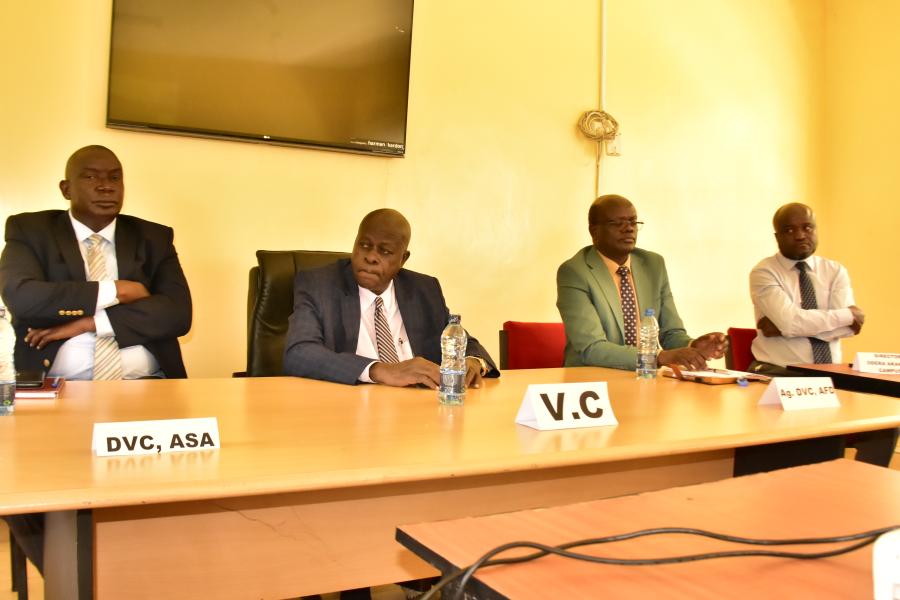
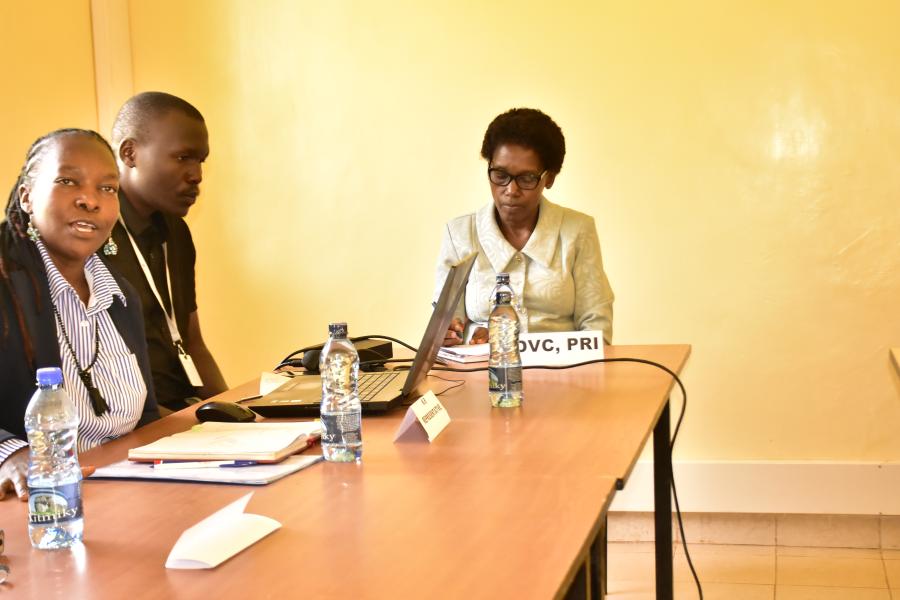
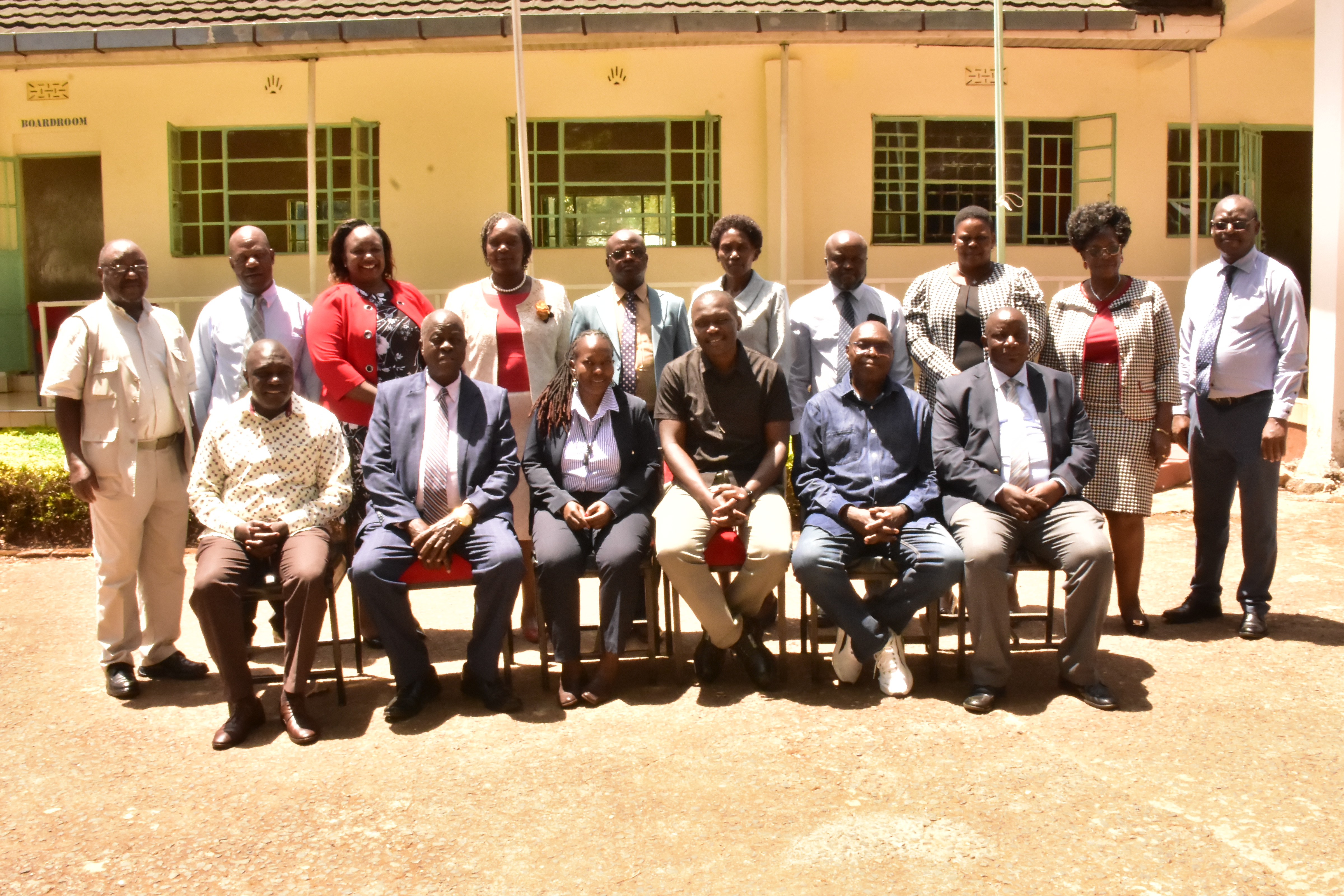
Maseno University held a high-level Resettlement Action Plan (RAP) stakeholders’ meeting with the Kenya Railways Corporation (KRC) to deliberate on the proposed construction of the Standard Gauge Railway (SGR) line that will traverse Odera Akang’o Campus, a subsidiary of Maseno University.
The meeting was convened and officially called to order by the Vice-Chancellor of Maseno University, Prof. Julius Nyabundi bringing together senior university management, representatives from Kenya Railways and the Yala community represented by the area MCA and a representative from Member Parliament office Gem constituency for structured engagement on the project.
Kenya Railways made a comprehensive presentation, marking the first formal stakeholder engagement between the two institutions regarding the project. The presentation focused on providing clarity on the proposed SGR alignment and the relocation of the institution prior to commencement of construction works.
The Kenya Railways team informed the meeting that a feasibility study for the Resettlement Action Plan was conducted by an independent consultant in November 2024 that commenced in Malaba.
The study seeks to identify project impacts, propose mitigation measures, and avoid challenges experienced during the first SGR phase, during which 25 institutions were displaced. Lessons drawn from SGR Phase 2A (Nairobi–Suswa, Narok County), which has been operational since 2019, were highlighted as critical to improving outcomes in the current phase.
The meeting was further informed that: SGR Phase 2B and 2C will cover the Naivasha–Kisumu–Malaba corridor. Phase 2C spans approximately 107 kilometres, from Kisumu to Malaba. The project traverses the counties of Narok, Bomet, Kericho, Nyamira, Kisumu, Vihiga, Siaya, Busia, and Malaba
In his address, the Vice Chancellor expressed full support for the construction of the SGR, emphasizing its national importance and transformative potential. However, he underscored that the success of the project at Maseno Universitys’ Odera Akang’o campus would depend on clear timelines, effective communication, and proactive planning.


The Vice Chancellor called upon the Kenya Railways team to provide a clear, precise, and actionable way forward for the project taking into account all possible eventualities, including potential future expansion of the railway line and noise mitigation measures, particularly during teaching hours and student activities within the campus.
He further raised concern regarding the project timelines, noting that the National Land Commission currently lacks a substantive Chairperson, which could affect land acquisition processes. He emphasized the need for clarity on how long the project would take, given that the University operates within a structured academic calendar.
While cautioning against placing excessive constraints on the project, the Vice Chancellor reiterated the University’s willingness to collaborate, stressing that early planning and continuous engagement would be key to minimizing disruption to academic programmes.
Maseno University reaffirmed its commitment to transparent engagement and collaboration with Kenya Railways and other stakeholders to ensure that the proposed SGR project is implemented in a manner that safeguards the University’s academic mission while supporting national infrastructure development. Further consultations will be undertaken as the project progresses.