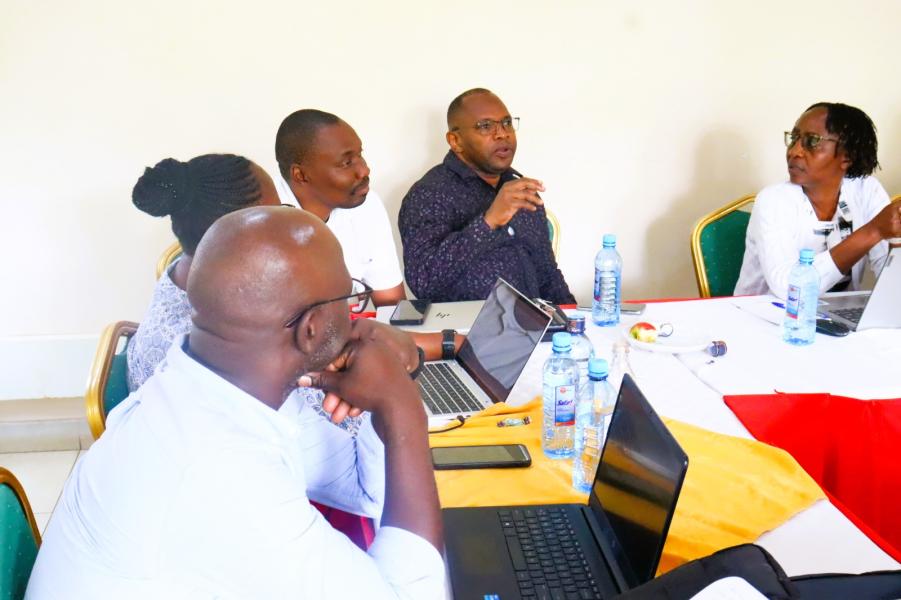
Strategic Review of Kisumu County Food System Strategy 2023-2027

During the review of the Kisumu County Food System Strategy 2023–2027, stakeholders examined the strategic objectives and interventions designed to transform the county’s food system into a sustainable, resilient, and inclusive framework. The strategy is organized around six thematic areas, each with specific objectives and implementation strategies.
According to the Kisumu County Food System Strategy 2023–2027, the six thematic areas are:
Food System Governance, Production, Post-Harvest Handling and Value Addition, Infrastructure Development, Market Access and ICT, Nutrition, Food Safety and Health, Cross-Cutting Issues
The cross-cutting issues include:
Climate Change, Food Loss and Food Waste, Gender Mainstreaming, Youth and Employment in Food Systems, Social Protection and Senior Citizens Affairs and People Living with Disabilities (PLWDs)
1. Food System Governance
The strategy seeks to strengthen governance structures by increasing financial commitments toward policy implementation, establishing stakeholder participation mechanisms, enhancing sectoral coordination, and developing appropriate regulatory frameworks. Key strategies include the establishment of a Policy and Partnerships Resource Mobilization Committee, formation of County Food System Working Committees, capacity building for sector coordination teams, and development of relevant food-related legislation.

2. Production, Post-Harvest Handling and Value Addition
To improve food production and agricultural productivity, the strategy focuses on increasing access to affordable quality inputs through subsidies, promoting sustainable irrigation systems, supporting regenerative agriculture, strengthening extension services, and enhancing farmer capacity building. Additional interventions include improved product packaging and branding, establishment of cottage industries, promotion of aggregation services, zoning of produce in markets, urban and peri-urban agriculture, climate-smart agriculture, and reduction of post-harvest losses through innovation and improved infrastructure


3. Food Systems Infrastructure Development
The county aims to develop and expand infrastructure that supports sustainable food systems. Priority areas include improving food retail markets, expanding all-weather road networks, integrating rail, air, and water transport systems, promoting food processing plants, strengthening warehousing and aggregation facilities, establishing auction services, expanding cold storage infrastructure, and improving irrigation efficiency through the construction and maintenance of dams and water pans. Market infrastructure development will be undertaken in collaboration with the private sector.

4. Market Access and ICT
The strategy recognizes the importance of technology and market connectivity in enhancing agricultural competitiveness. It therefore promotes market digitalization, improved access to market information, strengthened agribusiness communication systems, expansion into new export markets, and strengthening of farmer associations and cooperatives, including the formation of a county-level cooperative union.
5. Nutrition, Food Safety and Health
To improve the nutritional well-being of residents, the strategy promotes positive dietary behavior change, consumer awareness on healthy diets, food safety across the value chain, improved quality of school meals, and establishment of consumer information systems to support nutrition and food safety education.
6. Cross-Cutting Issues
The strategy mainstreams climate change adaptation and mitigation, food loss and waste management, social protection for vulnerable populations, disaster and emergency response mechanisms, and digital transformation across food value chains. Emphasis is placed on recycling, reducing and reusing waste, economic stimulus support for vulnerable communities, improved information sharing, and enhanced digitization to increase efficiency throughout the food system.


In Conclusion
The review highlighted that the Kisumu County Food System Strategy 2023–2027 provides a comprehensive roadmap for achieving food and nutrition security through strengthened governance, increased agricultural productivity, improved infrastructure, enhanced market access, better nutrition outcomes, and integration of cross-cutting sustainability measures. The collaboration between Maseno University and the County Government of Kisumu under the AgriFoSe2030 Project reinforces evidence-based planning and implementation toward a resilient and sustainable food system for the county.
Therefore